Deploying electronic infrastructure in coastal or offshore environments guarantees rapid hardware destruction unless protected by a heavily treated, marine-grade housing. To survive the relentless assault of airborne salt spray, severe galvanic corrosion, and heavy deck washdowns, an enclosure must combine an impenetrable IP67/IP68 physical seal with specialized anti-corrosive surface treatments. Specifying thick-walled die-cast aluminum paired with marine-rated anodic oxidation or heavy powder coating is the only reliable methodology to prevent atmospheric chloride ions from vaporizing internal circuitry while maintaining the essential passive thermal management required by high-power maritime transmitters.
The Devastating Reality of Salt Fog on Electronics
Marine engineers and offshore platform operators understand that the ocean acts as a massive, highly conductive chemical bath. The primary killer of maritime electronics is not just direct submersion, but airborne salt fog. Seawater droplets atomized by crashing waves and coastal winds are carried inland, settling on every exposed surface. Because saltwater is a highly efficient electrolyte, it aggressively accelerates galvanic corrosion.
When standard, untreated industrial enclosures are deployed on a shipping vessel or a coastal radar tower, the chlorine ions in the salt fog attack the passivated film of the metal. Carbon steel will succumb to red rust in a matter of weeks, destroying gasket seams and allowing water to flood the interior. Furthermore, standard plastics like ABS or generic polycarbonates face a dual threat: they are bombarded by extreme maritime UV radiation that causes brittleness, while sub-zero sea winds induce micro-cracking, completely destroying the waterproof integrity of the housing.
Engineering True Salt Spray Resistance
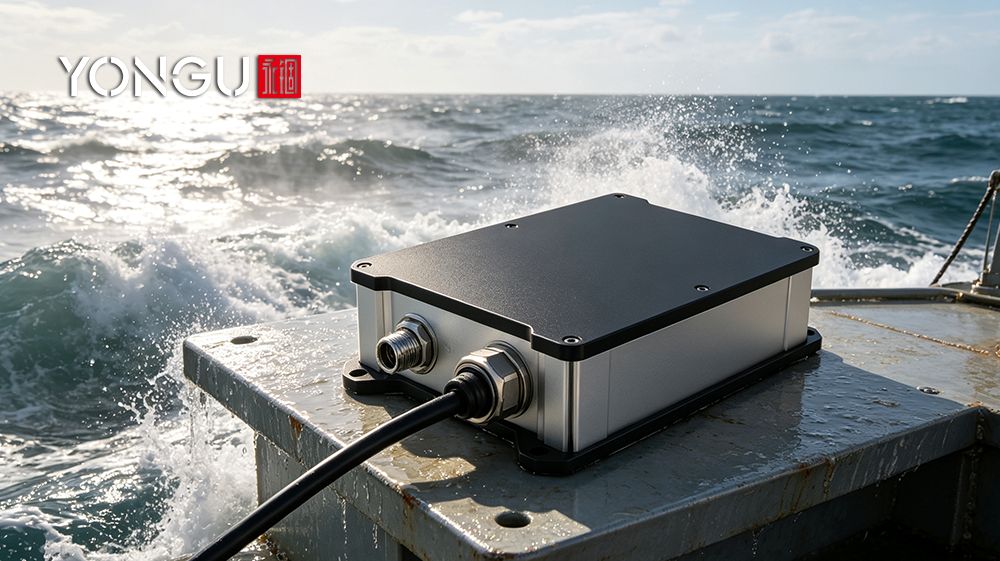
To survive these conditions, an enclosure must undergo rigorous validation, most notably the ASTM B117 salt spray (fog) test. In this highly accelerated life test, enclosures are placed in a heated chamber and continuously blasted with a 5% saline solution fog for hundreds, or even thousands, of hours. A true salt spray resistant enclosure must emerge from this chamber with zero structural pitting, no peeling of the surface coating, and a completely dry interior chamber.
Achieving this level of endurance requires a multi-layered defense. While aluminum is inherently rust-proof (unlike iron), bare aluminum exposed to saltwater will develop localized white powdery pits. Therefore, a marine-grade aluminum housing must undergo severe surface preparation. This involves precision sandblasting followed by hard-coat anodizing, chromate conversion, or a thick, UV-stabilized polyester powder coat. This chemical barrier permanently seals the microscopic pores of the aluminum, rendering it completely impervious to chloride penetration.
Flawless Integration and The "Machine-First" Rule
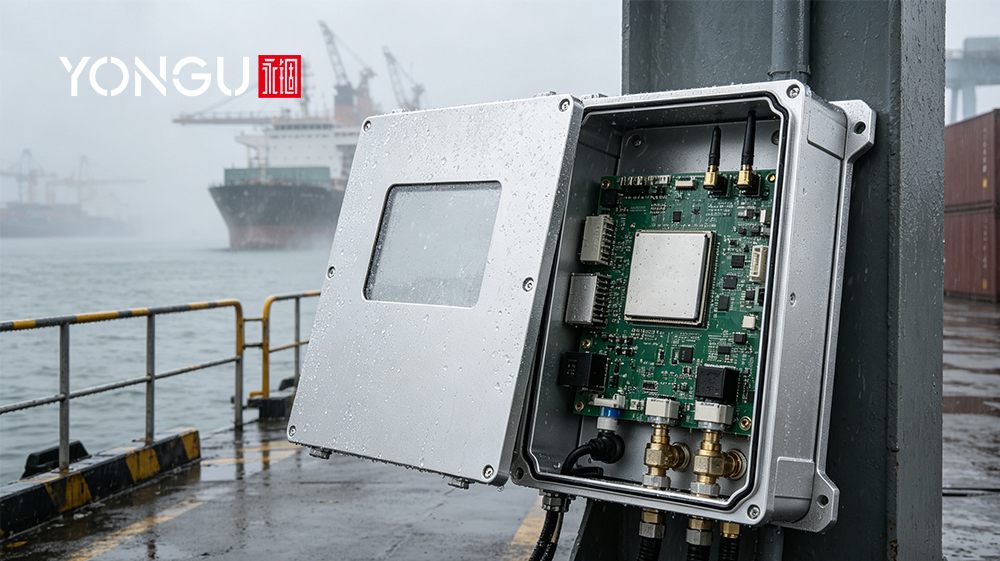
A fatal mistake in marine hardware integration is field modification. When a technician takes a drill to a pre-coated marine box to install a cable gland or a marine-grade NMEA connector, they instantly expose the raw, unprotected metal beneath the coating. The salt air immediately attacks this raw edge, creating "corrosion creep" that eventually lifts the coating off the box and compromises the watertight gasket.
To eliminate this vulnerability, advanced system integrators rely on professional fabrication partners like YONGU. Rather than risking onsite modifications, engineers can specify a specialized marine waterproof enclosure built to exact specifications from the factory. YONGU’s manufacturing process respects the stringent "machine-first" rule.
When you design a coastal electronics box with YONGU, their heavy-duty die-cast aluminum profiles are entirely CNC-machined before any surface treatment is applied. Every required hole for waterproof M-style connectors, ventilation breather valves, and mounting brackets is precision-milled first. Only after the machining is perfectly complete does the enclosure undergo high-grade anti-corrosion anodizing or powder coating. This ensures that even the inner threads of your cable glands are chemically protected, delivering a flawless IP68 barrier that arrives globally ready for immediate, risk-free deployment.
Material Comparison for Maritime Deployments
To assist marine engineers and naval architects in selecting the proper housing material for coastal infrastructure, the following matrix compares the real-world ocean performance of standard industrial materials:
| Material / Specification | Treated Marine Aluminum (YONGU) | 316L Stainless Steel | Fiberglass (FRP) | Standard Carbon Steel |
|---|---|---|---|---|
| Salt Fog Resistance (ASTM B117) | Exceptional (Due to specialized powder/anodic coat) | Exceptional (Inherently resistant) | High (Immune to metallic rust) | Very Poor (Rapid oxidation and failure) |
| Thermal Heat Dissipation | Superior (Vital for high-power radios & solar controllers) | Poor (Traps internal heat) | Terrible (Acts as a thermal blanket) | Moderate |
| Weight & Structural Load | Lightweight (Reduces mast/pole load) | Extremely Heavy | Moderate | Very Heavy |
| EMI/RFI Shielding for Nav/Comms | High (Creates a natural Faraday cage) | High | None (Requires expensive internal coating) | High |
| CNC Customization Cost | Low to Moderate (Fast, clean precision cuts) | Very High (Destroys tooling bits rapidly) | Moderate (Produces hazardous dust) | Moderate |
Frequently Asked Questions (FAQ)
Q1: Why choose marine-coated aluminum over 316 Stainless Steel for a coastal electronics box?
A: While 316 stainless steel is incredibly corrosion-resistant, it is immensely heavy, notoriously difficult and expensive to machine for custom I/O ports, and offers very poor thermal conductivity. Marine-treated aluminum offers identical corrosion protection while acting as a massive passive heatsink for your internal electronics, all at a fraction of the weight.
Q2: Will high-pressure deck washdowns force water into the enclosure?
A: Not if the enclosure is properly rated. An IP67 rating ensures protection against temporary submersion, while an IP68/IP69K rating guarantees the housing will withstand continuous submersion and high-pressure, high-temperature jet sprays typical in commercial shipping washdowns. This is achieved through precision-milled gasket channels and high-compression silicone seals.
Q3: What happens to trapped humidity inside a sealed waterproof box over the ocean?
A: Sudden temperature drops over the ocean can cause internal condensation, even in a perfectly sealed box. To combat this, advanced marine enclosures often integrate specialized waterproof breather valves (Gore-Tex vents) that allow air pressure and moisture vapor to equalize and escape without allowing liquid water or salt to enter.
Defend Your Maritime Infrastructure
The ocean is unforgiving, and your hardware protection must be absolute. Do not leave the survival of your coastal telecommunications, marine telemetry, or shipboard automation to chance. Equip your electronics with heavy-duty, customized marine aluminum housings engineered to outlast the harshest storms.