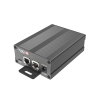
Outdoor industrial electronics are constantly exposed to harsh environments like rain, dust, high humidity, and even temporary submersion. Meanwhile, internal power components generate continuous heat. Traditional enclosure designs often face a dilemma: adding ventilation holes for cooling compromises water resistance, while fully sealed, unvented housings trap heat, leading to thermal throttling and system failure. The Yonggu L10 series waterproof & heat-dissipating aluminum enclosure resolves this conflict with a unibody finned conduction cooling structure. Supporting both off-the-shelf purchases and deep customization, it is widely compatible with various outdoor industrial hardware products.
I. Core Design Philosophy of Waterproof Thermal Aluminum Enclosures
1.1 Fully Sealed IP68 Waterproof Design
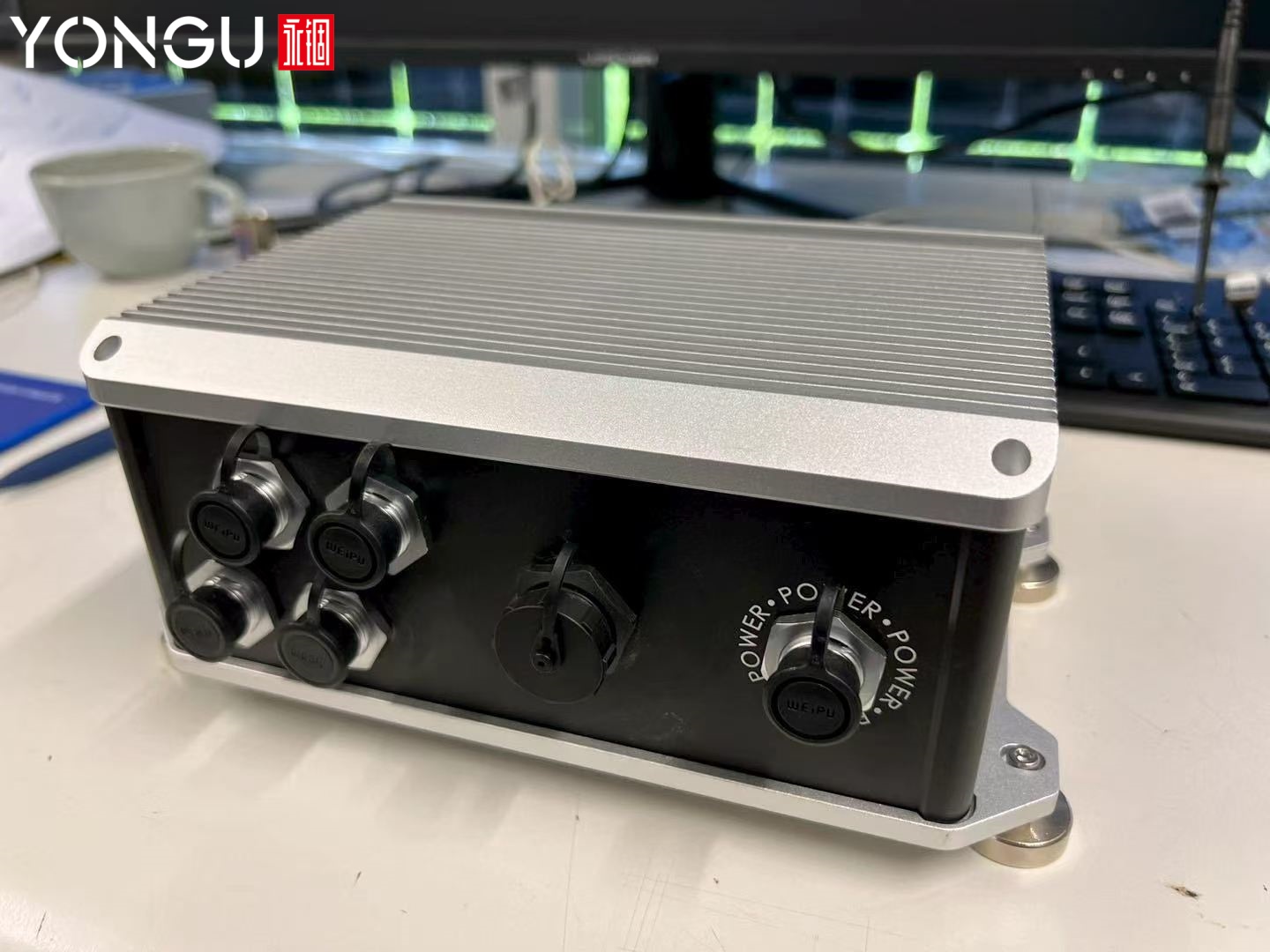
• Constructed from extruded aluminum profiles with high-weather-resistance silicone gaskets at the joints, achieving an IP68 rating to withstand outdoor exposure and temporary submersion;
• Zero ventilation holes on the main body, eliminating the ingress of moisture and dust from the root and ensuring long-term waterproof reliability;
• Panels feature machining allowances for custom cutouts, seamlessly matching dedicated waterproof aviation connectors for the sealed routing of power and signal cables.
1.2 Top-Finned Sealed Thermal Management Structure
• The top features densely extruded integrated cooling fins. Heat generated by internal components is conducted through the metal housing to the external fins and dissipated via natural convection;
• This passive cooling solution requires no through-holes, perfectly preserving cavity sealing—achieving true synergy between waterproofing and heat dissipation;
• Manufactured from 6063 aluminum alloy, known for its superior thermal conductivity, to rapidly extract heat from high-power components and effectively control internal temperature rise.
1.3 Versatile Interfaces & Mounting Options
• Compatible with a variety of dedicated waterproof connectors. Power and signal interfaces can be configured to specific project requirements;
• Built-in mounting flanges support wall-mount, pole-mount, and flush-mount installations, adapting to diverse field deployment conditions;
• Pre-designed internal PCB guide rails and brass standoff mounting points facilitate the assembly of motherboards, power modules, and other components.
Deep Dive: Understanding IEC 60529 Standard and IP Rating Distinctions
When selecting outdoor enclosures for industrial electronics, understanding the nuanced differences in ingress protection is paramount. The IP (Ingress Protection) rating system, defined by the international standard IEC 60529, was developed by the International Electrotechnical Commission to provide a unified, global language for grading the resistance of enclosures against environmental factors. Prior to its widespread adoption, manufacturers relied on ambiguous marketing terms like "water-resistant" or "weatherproof," which offered no quantifiable guarantees and frequently led to equipment failure in mission-critical deployments.
IEC 60529 Test Conditions Diagram
To fully grasp the capabilities of industrial-grade enclosures, it is essential to examine the exact testing conditions required to achieve these certifications. Below is a comprehensive diagrammatic table illustrating the rigorous testing criteria under IEC 60529, clarifying exactly what each rating entails.
| IP Rating | Solid Particle Protection (1st Digit: 6) | Liquid Ingress Protection (2nd Digit) | IEC 60529 Specific Test Conditions Diagram |
|---|---|---|---|
| IP65 | Dust-tight (No ingress of dust; complete protection against contact) | Water Jets (Level 5) | Water projected by a 6.3 mm nozzle against the enclosure from any direction. Duration: 15 minutes. Volume: 12.5 L/min. Pressure: 30 kPa at 3 meters distance. |
| IP67 | Dust-tight (Vacuum test applied for maximum integrity) | Temporary Immersion (Level 7) | Immersion in water under defined conditions of pressure and time. Depth: Up to 1 meter. Duration: Maximum 30 minutes. Condition: Lowest point of enclosure 1000 mm below surface. |
| IP68 | Dust-tight (Vacuum test applied for maximum integrity) | Continuous Immersion (Level 8) | Suitable for continuous immersion in water under conditions specified by the manufacturer (must be substantially more severe than IP67). Depth/Duration: Custom defined (e.g., 2+ meters for prolonged periods). |
IP65 vs IP67 vs IP68: A Detailed Comparison
A frequent dilemma for hardware engineers is choosing between varying levels of high-tier ingress protection. To make an informed decision for your project's lifecycle, let's explore a detailed IP65 and IP67 vs IP68 comparison.
IP65: Designed primarily to withstand low-pressure water jets, dew, and heavy rain. It is heavily utilized in outdoor environments where equipment might be hosed down during factory cleaning operations or subjected to seasonal monsoons. However, an IP65 enclosure is not structurally designed to survive any form of submersion. If dropped into a puddle or flooded trench, hydrostatic pressure will quickly breach the seals.
IP67: This rating represents a significant architectural step up, tailored for environments prone to temporary flooding. An IP67 enclosure can be safely submerged in water up to 1 meter deep for a strict maximum of 30 minutes. It handles hydrostatic pressure much better than IP65, offering an essential safety net for outdoor telecom hubs. Yet, prolonged submersion or sinking beyond the 1-meter mark will eventually exceed the threshold of its sealing gaskets.
IP68: The pinnacle of ingress protection for underwater or severely flood-prone industrial applications. Unlike IP67, IP68 allows for continuous submersion. However, it is crucial to understand that the precise depth and duration are agreed upon between the manufacturer and the user. In the case of the Yonggu L10 IP68 waterproof enclosure, the highly engineered silicone gaskets, zero-ventilation philosophy, and extruded unibody design offer a resilient barrier capable of withstanding extreme outdoor environments and extended underwater exposure. Ultimately, while IP65 and IP67 provide excellent environmental defense mechanisms for transient wet conditions, only IP68 guarantees operational security when the environment inherently involves continuous immersion.
II. L10 Waterproof & Heat-Dissipating Aluminum Enclosure Specifications
| Item | Parameter Details |
|---|---|
| Product Model | L10 |
| Product Link | https://www.yg-enclosure.com/product/ip67-power-supply-enclosure-l10a-200-150mm.html |
| Ingress Protection | IP68 |
| Cooling Method | Top-integrated fin passive conduction cooling (No ventilation holes) |
| Material | 6063 Extruded Aluminum Alloy |
| Fulfillment Mode | Off-the-shelf inventory + Customization |
| Mounting Options | Wall-mount, Pole-mount, Flush-mount |
| Interface Solution | Custom panel cutouts matched with waterproof connectors |
III. Typical Application Scenarios
3.1 Outdoor IoT Gateways / Edge Computing Boxes
• Ideal for field-deployed IoT gateways and edge computing devices exposed to rain and dew. The IP68 enclosure seals out moisture, while the top fins dissipate heat from processing chips to prevent thermal throttling.
3.2 Industrial DAQ Terminals, PLCs, and In-Vehicle Electronics
• Prevents dust and water ingress in factory floors or mobile/vehicular environments; conduction cooling ensures 24/7 stable, continuous operation.
3.3 Telecom Base Station Units, EV Charger Control Boxes, and PDUs
• Perfectly suited for outdoor renewable energy equipment facing extreme day-night temperature swings. The hole-free thermal design eliminates the risk of clogged vents, significantly reducing field maintenance workloads.
Five Common Misconceptions About IP68 Waterproof Ratings
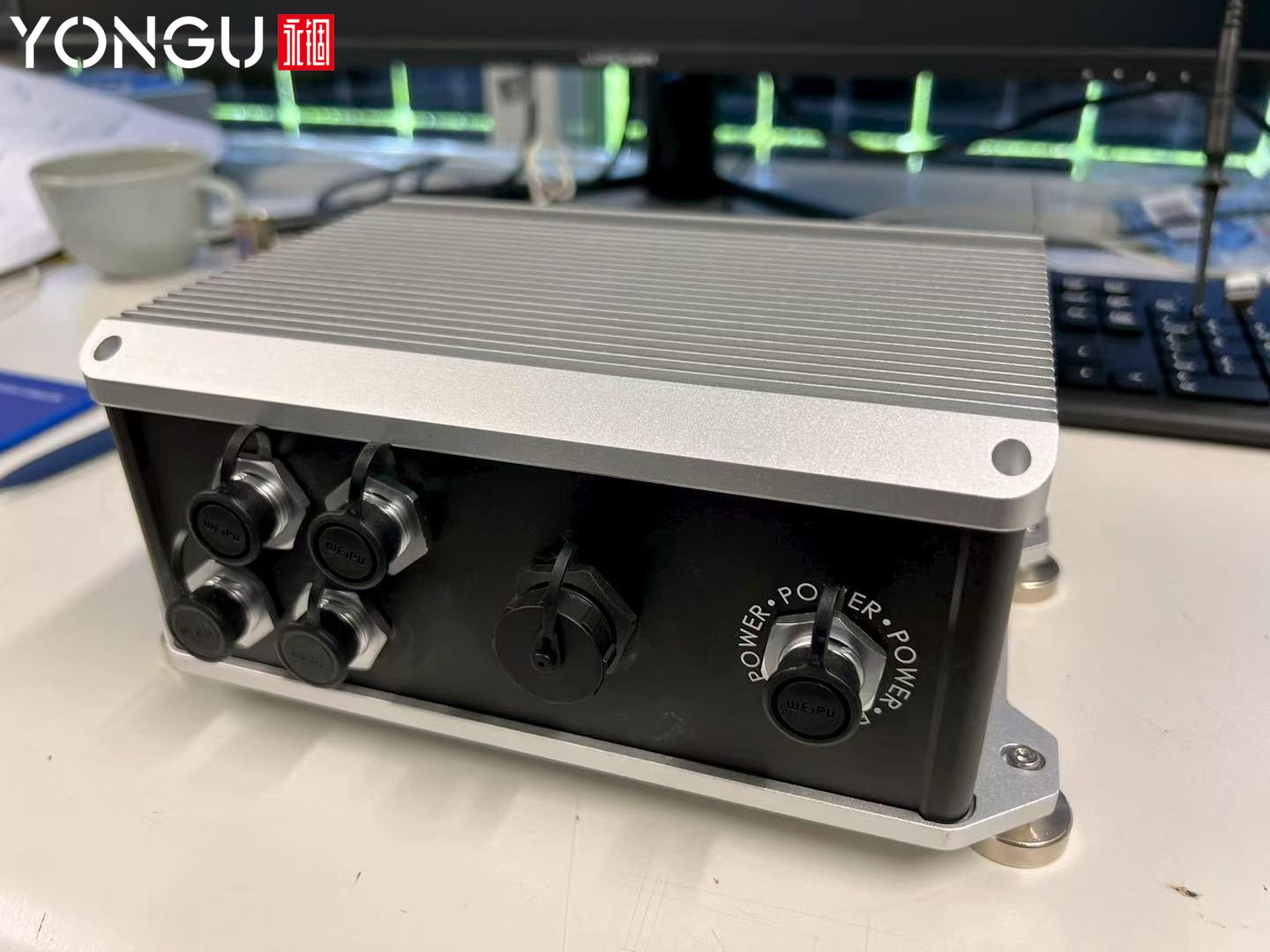
Despite being the gold standard for waterproof aluminum enclosures, the IP68 rating is frequently misunderstood by end-users, marketing departments, and even procurement teams. To prevent catastrophic hardware failures and establish realistic project expectations, we must debunk several prevalent IP68 myths that dominate the electronics industry.
Misconception 1: "IP68 = You Can Submerge It in Water Forever"
This is arguably the most widespread fallacy. Many assume that the "8" in IP68 translates to absolute, eternal underwater invulnerability regardless of depth. In reality, IEC 60529 dictates that IP68 means the enclosure can be submerged continuously under specific conditions defined by the manufacturer, which must simply be more severe than IP67. It does not mean the enclosure can be dropped into the Marianas Trench or left at the bottom of a lake for a decade without moisture ingress. High hydrostatic pressure over years will test the molecular limits of any commercial sealant. Always consult the specific depth-to-time ratio parameters provided for your chosen IP68 housing.
Misconception 2: "IP68 Automatically Means It Passed IP65 Jet Tests"
The IP rating system is not strictly linear when testing for liquid ingress. The tests for high-pressure water jets (Levels 5 and 6) and hydrostatic immersion (Levels 7 and 8) utilize completely different fluid physics. An IP68 enclosure is meticulously crafted to endure the slow, even, distributed pressure of submersion. It does not automatically guarantee that it will withstand a focused, high-velocity water jet (like an industrial pressure washer) hitting a seam. Fortunately, premium solutions like our L-Series employ versatile sealing architectures accommodating both immersion and rainfall, but dual ratings (e.g., IP66/IP68) should be explicitly verified if pressure washing is expected.
Misconception 3: "Waterproof Means 100% Condensation-Proof"
A fully sealed IP68 aluminum enclosure prevents exterior liquid water from entering. However, it cannot suspend the laws of thermodynamics regarding the air trapped inside during assembly. If the electronics are sealed in a highly humid factory, that moisture remains inside. When deployed outdoors and temperatures plummet at night, internal humidity condenses into water droplets on the PCB, causing fatal short circuits. IP68 prevents new water from entering, but controlling internal condensation requires pre-baking components, assembling in humidity-controlled dry rooms, or applying conformal coatings to the PCB.
Misconception 4: "IP68 Protection Applies Equally to All Liquids"
When an independent laboratory tests an enclosure for an IEC IP68 rating, the medium utilized is strictly fresh, clean water. Achieving IP68 in fresh water does not immediately translate to surviving saltwater, chlorinated pools, engine oils, or acidic chemical baths. Saltwater, for example, is highly corrosive and can rapidly degrade the chemical bonds of standard silicone gaskets. For marine or chemical plant deployments, IP68 certification must be paired with anti-corrosion anodized coatings and chemically resistant fluoroelastomer (FKM) sealing rings.
Misconception 5: "Once IP68, Always IP68 (Zero Maintenance)"
Ingress protection is not a permanent, unchangeable state—it is a conditional rating based on the physical integrity of the enclosure fresh off the assembly line. Over time, extreme thermal cycling (baking in summer, freezing in winter) can cause sealing rings to lose elasticity and permanently compress. Furthermore, physical deformations caused by accidental drops or vandalism can shift the alignment of the panels, creating microscopic gaps. Maintaining an IP68 rating in long-term field deployments requires proper torqueing of screws during assembly and replacing gaskets if the unit is repeatedly opened for maintenance.
IV. Off-the-Shelf & Custom Services
• Standard Off-the-Shelf: L10 standard enclosures are kept in stock for the rapid delivery of samples and low-to-medium volume orders;
• Custom Cutouts: Precision panel machining based on CAD drawings to accommodate various waterproof connectors;
• Structural Modification: Custom dimensions, internal standoff/rail machining, and tailored flange mounting structures;
• Cosmetic Customization: Custom anodized colors and laser-engraved logos or device identifiers;
• Mounting Customization: Complementary brackets to support wall, pole, and flush mounting needs.
The Science of Advanced Heat Dissipation in Fully Sealed Systems
One of the most complex mechanical engineering challenges is managing internal thermals when you can no longer rely on active airflow. As debunked in our misconceptions section, keeping water out necessitates entirely sealing the environment. Inherently, this traps the continuous heat generated by microprocessors, power supply units, and 5G communication modules.
The Limitation of Traditional Active Cooling
Standard indoor electronics rely on convective airflow—fans pull cool ambient air in through intake vents, passing it over heatsinks, and push hot air out through exhaust vents. In an IP68 outdoor scenario, ventilation holes represent immediate failure points for water ingress. Moreover, mechanical fans have a notoriously high failure rate when exposed to fluctuating outdoor temperatures, high humidity, and airborne dust particles. When a fan fails inside a sealed box, catastrophic thermal runaway is imminent, leading to CPU throttling or complete hardware death.
Mastering Passive Conduction and Natural Convection
The Yonggu IP68 outdoor enclosures bypass these severe limitations through a highly optimized, completely passive conduction cooling ecosystem. The thermodynamic process operates flawlessly in three critical stages:
- Internal Conduction (Bridging the Gap): The heat generated by the PCB components must first be transferred to the enclosure walls. Because stagnant air is a poor conductor of heat (acting essentially as an insulator in a sealed box), engineers utilize gap-filling thermal pads, thermal paste, or copper heat pipes to create a direct physical bridge between the hot components and the internal surface of the aluminum housing.
- Material Transfer (Fourier's Law applied to 6063 Aluminum): Once the thermal energy reaches the inner wall, the material properties of the enclosure dictate the speed of heat transfer. The L10 series is extruded from 6063 Aluminum Alloy, a premium industrial material celebrated for its excellent thermal conductivity rating (approximately 200 W/m·K). This allows the heat to rapidly and evenly spread from localized hotspots across the entire massive surface area of the metal chassis.
- External Dissipation (The Fin Advantage): The final stage is releasing the heat into the ambient outdoor air. The exterior of the enclosure is equipped with precision-extruded cooling fins. These fins drastically multiply the overall surface area of the enclosure without increasing its foundational footprint. As the fins heat up, they warm the surrounding air layer. The heated air rises naturally, creating a passive vacuum that pulls cooler air up from beneath—an automatic thermodynamic process known as natural convection.
Optimizing Fin Geometry and Orientation for Peak Efficiency
Not all finned enclosures perform equally under the sun. The precise spacing, thickness, and height of the cooling fins on Yonggu enclosures are mathematically calculated using CFD (Computational Fluid Dynamics) to balance thermal surface area with aerodynamic efficiency. If fins are placed too close together, boundary layer interference occurs, stifling airflow and ironically trapping heat between the fins. The extruded unibody design ensures optimal fin pitch to maximize those crucial convective currents.
For field deployment, orientation is key. When mounting the enclosure on an outdoor pole or wall, installing the unit so that the fins run vertically (parallel to gravity) vastly accelerates the natural "chimney effect," ensuring maximum heat dissipation velocity. In addition, the dark anodized exterior finishes increase the thermal emissivity of the metal, allowing it to radiate infrared heat more effectively. This brilliant synergy of impenetrable waterproofing and unibody conduction cooling is exactly why our IP68 waterproof enclosure series remains the top global choice for advanced outdoor industrial electronics, effortlessly bridging the gap between absolute sealing and continuous high-performance thermal regulation.
V. Selection Guidelines for Waterproof Thermal Enclosures
• Power Consumption Assessment: Designed for low-to-medium power devices using hole-free passive fin cooling. For higher power configurations, we recommend adding thermal pads to enhance the contact between heat-generating components and the housing, boosting thermal transfer efficiency;
• IP Rating Maintenance: IP68 integrity relies on the sealing gaskets and an unbroken housing. Unauthorized drilling is prohibited; any new interfaces must be paired with appropriately rated waterproof connectors;
• Installation Advice: For pole-mounted deployments, prioritize orienting the cooling fins upward to ensure optimal airflow and maximize thermal performance.
VI. Technical Support for Project Implementation
Yonggu provides comprehensive solutions for custom waterproof & heat-dissipating enclosures. Relying on the proven L10 series waterproof thermal aluminum enclosures, we support rapid prototyping through to high-volume production. Our engineers offer expert sizing and evaluation based on your total system power consumption, interface count, and field installation conditions—resolving the industry-wide pain point where waterproofing and cooling often compromise one another. Whether purchasing standard stock directly or requesting deep customized solutions for your waterproof & heat-dissipating aluminum enclosure, you can obtain professional project evaluations and competitive quotes from us.