Upgrading factory automation and testing equipment demands physical infrastructure that actively enhances electronic performance, rather than just housing it. Extruded aluminum is the undisputed standard for modern hardware because it delivers an unbeatable combination: it acts as a massive passive heat sink, forms an impenetrable Faraday cage against electromagnetic interference (EMI), and provides exceptional structural rigidity at a fraction of the weight of steel. By adopting aluminum enclosures, global automation engineers instantly resolve the most critical failure points in hostile manufacturing environments—thermal throttling, signal corruption, and physical degradation.
1. Exceptional Passive Heat Dissipation
In high-density industrial control rooms and heavy machinery zones, processors, relays, and power supplies generate significant thermal loads. If this heat is trapped, components experience accelerated wear, leading to system crashes and halted production lines. Aluminum boasts a thermal conductivity of roughly 205 W/m·K, which is dramatically higher than cold-rolled steel or plastic. This inherent property allows the enclosure itself to pull heat away from internal components, distributing it across its exterior surface area. The need for internal, failure-prone mechanical cooling fans is often entirely eliminated, ensuring quiet and maintenance-free operation.
2. Complete EMI and RFI Shielding
Modern factory floors are saturated with electrical noise. Variable Frequency Drives (VFDs), heavy robotic welding arms, and high-voltage motor starters constantly emit electromagnetic and radio-frequency interference (EMI/RFI). A major benefit of an aluminum industrial enclosure is its ability to block these invisible frequencies. Seamless interlocking aluminum panels create a highly conductive Faraday cage, preserving the integrity of sensitive analog sensor data, network signals, and I/O communications, which is critical for precise automated manufacturing.
3. Unyielding Durability in a Lightweight Profile
System integrators often require control units that are both extremely rugged and portable enough for field technicians to carry. Steel enclosures, while strong, are notoriously heavy, which drastically increases global shipping costs and complicates installation. Aluminum is approximately one-third the weight of steel but maintains immense tensile strength. For diagnostic rigs and mobile automation tools, this high strength-to-weight ratio ensures the equipment survives drops, vibrations, and structural stress without exhausting the personnel transporting it.
4. Precision Customization for Complex I/O Layouts
Transitioning these technical benefits into real-world applications often hits a bottleneck during the manufacturing phase. Adapting a generic box to fit proprietary connectors, DB9 ports, and heavy-duty power terminals manually is imprecise and ruins the finish. This is where seamless modular design paired with professional CNC capabilities becomes crucial.
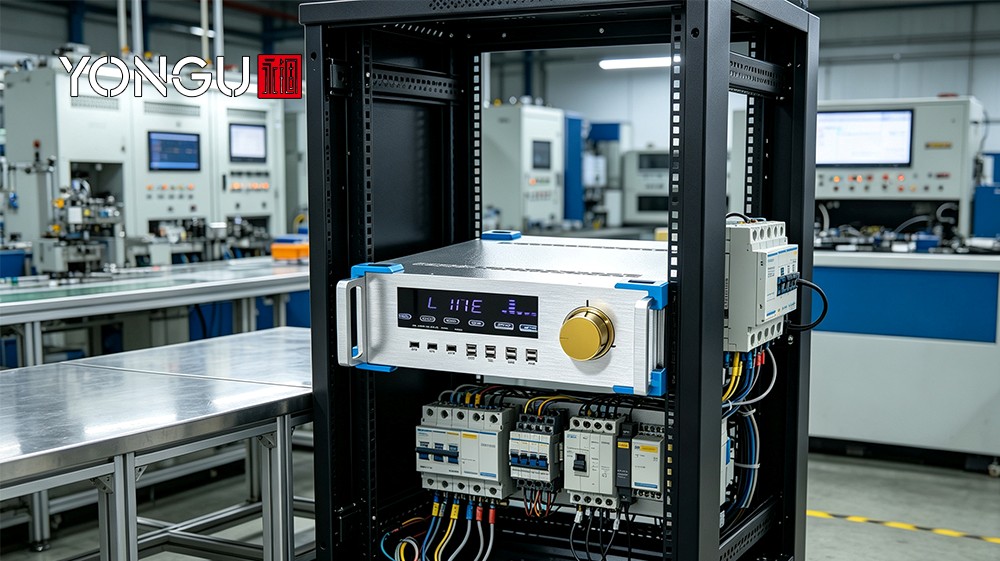
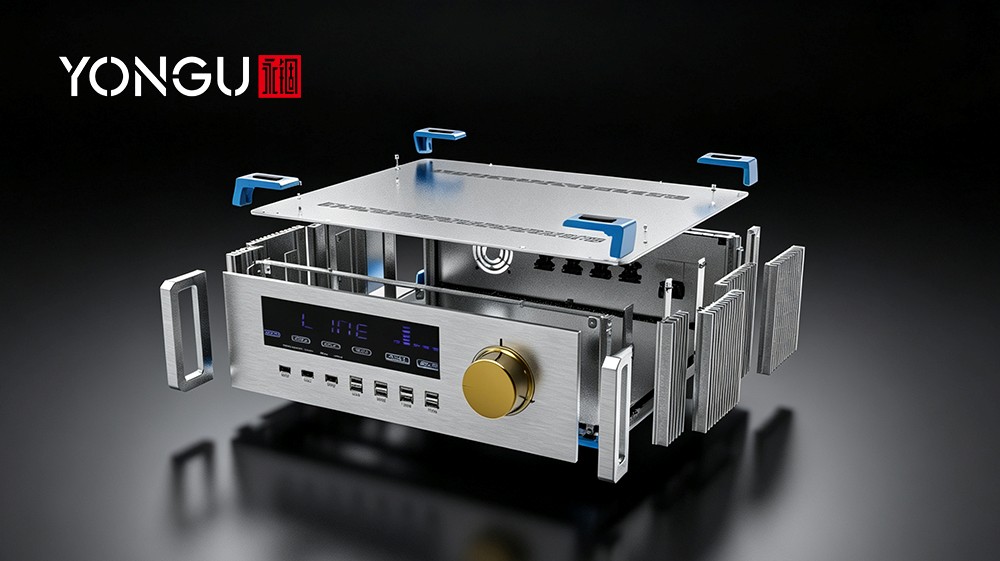
YONGU specifically engineers solutions to eliminate this friction. By utilizing their advanced modular platforms, such as the premium aluminum instrument enclosure (the A11-450-3U series), engineers bypass integration headaches. This specific industrial control chassis is designed for portability and heavy-duty rack mounting alike. Backed by YONGU’s comprehensive in-house factory capabilities—including micro-precision CNC milling, custom hole cutouts, and specialized anodizing—your specific I/O layout is factory-machined perfectly. The enclosures arrive globally ready for rapid PCB drop-in, saving engineering teams hundreds of hours in manual modification.
5. Inherent Corrosion Resistance for Hostile Environments
Industrial settings are often exposed to moisture, airborne chemical particulates, and varying humidity. When bare aluminum is exposed to air, it naturally forms a microscopic aluminum oxide layer that halts further oxidization. When professional suppliers like YONGU apply high-grade sandblasting and anodic oxidation surface treatments, this resistance is amplified. The chassis becomes highly resistant to scratches, chemical corrosion, and aesthetic wear, maintaining a premium look even after years on a factory floor.
Material Comparison for Industrial Control Applications
To clearly illustrate why aluminum remains the top-tier choice for global engineers, the following table benchmarks standard enclosure materials used in automation:
| Feature / Material | Extruded Aluminum | Cold Rolled Steel | Industrial Plastics (ABS/PC) |
|---|---|---|---|
| Heat Dissipation | Excellent (Acts as an active heatsink) | Poor (Traps heat, requires fans) | Very Poor (Thermal insulator) |
| EMI/RFI Shielding | Superior (Natural Faraday cage) | High (Good against low frequencies) | None (Unless internally coated) |
| Weight & Portability | Lightweight (Optimal for transport) | Very Heavy | Extremely Lightweight |
| CNC Machinability | Exceptional (Clean, burr-free cutouts) | Moderate (Tougher on tools) | Good (Risk of melting/cracking) |
| Corrosion Resistance | Excellent (Especially when anodized) | Low (Requires constant paint maintenance) | Excellent (Chemical resistant) |
Protecting Your Most Valuable Circuitry
In conclusion, relying on subpar housing for advanced factory hardware is a guaranteed route to system failure. Aluminum instrument enclosures dominate the industrial sector because they simultaneously solve the critical challenges of thermal management, electromagnetic interference, and environmental durability. By integrating precision-engineered, lightweight aluminum chassis into your designs, you secure operational continuity, extend component lifespans, and project a premium brand image to your end-users.
Ready to Upgrade Your Industrial Control Systems?
Stop compromising your advanced hardware with generic boxes. From ultra-precise CNC cutouts to ruggedized portability, YONGU provides fully customized housing solutions built to thrive in the toughest industrial environments worldwide.