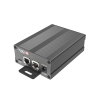
Outdoor IoT hardware and 5G nodes need two things: protection from water and a way to get rid of heat. An IP68 hybrid enclosure handles both. Extruded aluminum pulls heat away from the board, while plastic end panels let radio signals pass through. The result is a compact housing that keeps components dry, cool, and connected.
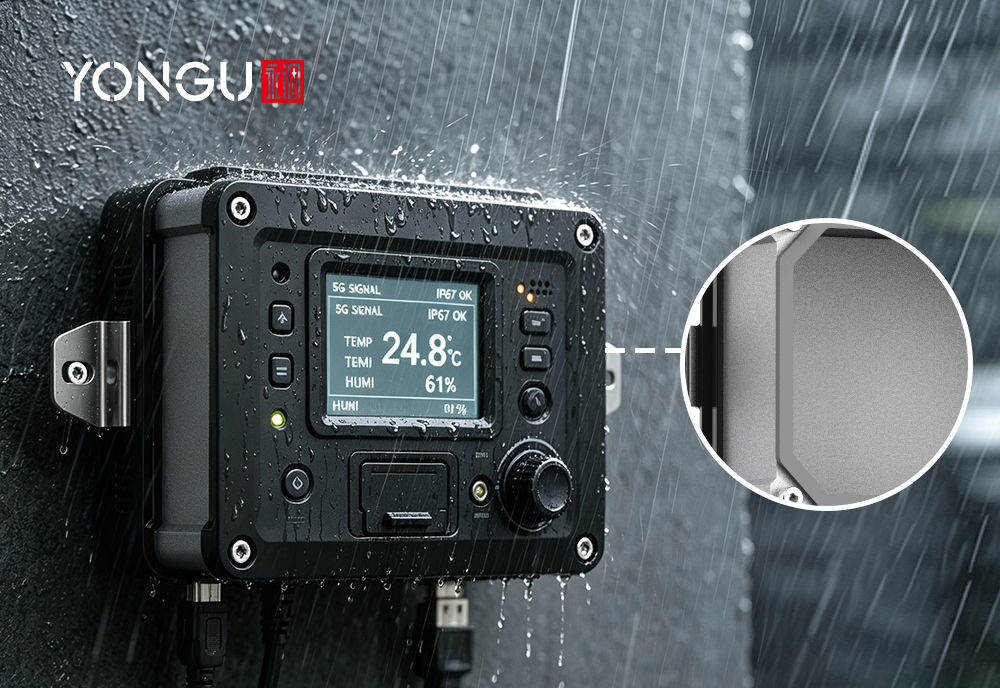
The Space and Environment Problem
Building a PCB that survives outdoors and still fits in a small box is one of the harder jobs in hardware design. IIoT sensors end up everywhere—humid cities in Southeast Asia, freezing plants in Northern Europe, dusty construction sites. Water and dust always find a way in.
At the same time, devices are shrinking. Traditional NEMA enclosures are too big for smart-city poles, streetlights, and factory robots. A smaller box is easier to mount and catches less wind, but every cubic millimeter inside needs to count.
Heat in 5G and High-Density Devices
5G, edge computing, and LoRaWAN all draw more power than older IoT hardware. More power means more heat. Trap that heat inside a sealed plastic case and the board will cook itself.
The case itself can double as a heatsink. Aluminum conducts heat at about 205 W/m·K. Add extruded fins to the outside and the surface area grows, pulling heat from the board through the mounting posts and into the air. Components stay below their thermal limits.
A Hybrid Design for Signal and Sealing
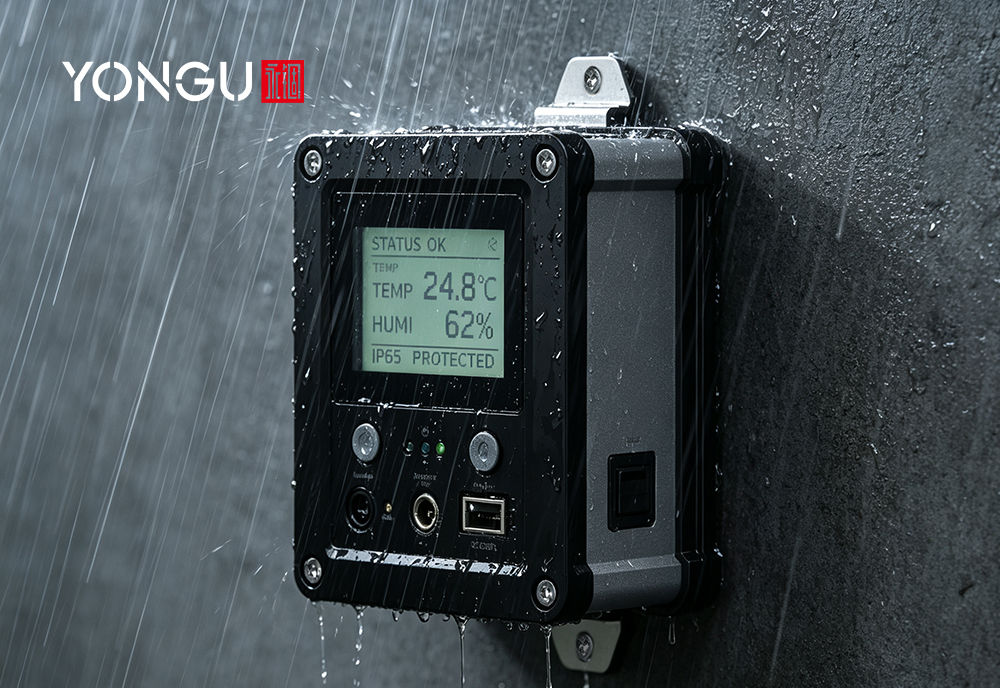
Aluminum blocks radio. A solid metal box is a Faraday cage—RF, Wi-Fi, and 5G signals can't get out. The usual workaround is to drill holes for external antennas, which creates leaks.
A hybrid design fixes this. The YONGU L01C series uses an aluminum body for heat and strength, with UV-resistant plastic end panels that let signals through. No antenna holes, no leaks.
The 100 × 75 mm L01C gives heat a 360° path out. Plastic end caps let internal PCB antennas transmit freely. Standard sizes and custom internal slots mean manufacturers can skip tooling and shorten R&D, while the IP68 rating keeps the device dry in long-term outdoor use.
What IP68 Actually Means
IP68 means the enclosure survives submersion past one meter, even in a compact case. That requires tight tolerances between the aluminum extrusion and the end caps.
Silicone O-rings or poured polyurethane gaskets sit in machined grooves. Screws compress them to fill every gap, sealing against high-pressure washdowns and creeping humidity.
Material Comparison
Here's how the materials stack up for 5G and IoT deployments.
| Enclosure Material Type | Heat Dissipation Performance | 5G/RF Signal Transmission | Durability & Impact Resistance | Ideal Deployment Scenario |
|---|---|---|---|---|
| 100% Polycarbonate (Plastic) | Poor (Retains internal heat) | Excellent (Zero interference) | Moderate (Prone to UV degradation) | Low-power indoor sensors |
| 100% Solid Metal / Steel | Excellent | Poor (Creates Faraday cage) | High (Prone to rusting over time) | Wired industrial control panels |
| Hybrid Aluminum + Plastic Covers | High (Extrusion acts as heatsink) | Excellent (Through plastic ends) | Very High (Anti-corrosion, UV protected) | Outdoor 5G Nodes, Remote IIoT Sensors |
Frequently Asked Questions (FAQ)
What does IP68 mean for industrial IoT enclosures?
IP68 is the highest protection rating. The 6 means dust can't get in. The 8 means it survives continuous submersion. That's why it matters on coasts, farms, and factory floors.
Why choose a compact aluminum case instead of a fully plastic shell?
5G and GPS processors run hot. Aluminum pulls that heat out and dumps it into the air. Plastic traps heat, which throttles CPUs and kills batteries early.
How do hybrid enclosures handle signal interference?
The aluminum body blocks radio, but the plastic end panels let it through. Antennas go near the plastic ends. You get the thermal and structural benefits of metal without sacrificing signal or waterproofing.
Need a case for your next IoT project? Contact us to discuss custom cutouts, standard sizes, or a fully custom design.