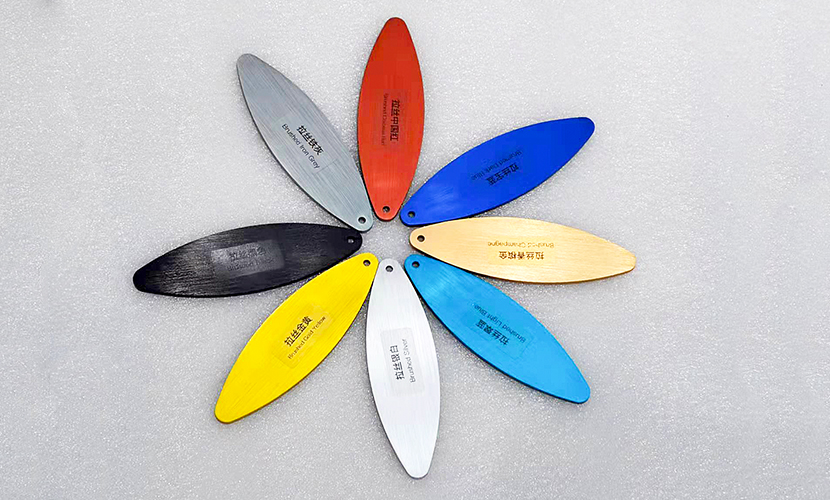
High-quality, proven durability, and creative aesthetics make anodized aluminum a great buy. Various texture finishes enhance an anodized aluminum. A bright brushed finish is one of them. Projects like rooftops, car decoration panels, mobile phone shells, and storefronts use bright brushed aluminum. These projects require a light finish, and a brushed anodized finish aluminum does the job for them.
Opting for brushed anodized aluminum for your next project is a smart choice since it has several excellent advantages. Despite its light and neat finish, anodized aluminum can still provide corrosion resistance, long durability, and abrasion resistance. It is easy to clean, water-resistant, and also free from acquiring scratches and fingerprints. When it comes to construction, brushed aluminum can be easily formed and welded. You won't regret upscaling with your customers.
It can provide a neat matte finish suitable for any plating or painting of their choice and is very fashionable.
Brushed and Anodized Are Two Different Things
Buyers searching for brushed anodized aluminum usually want to know whether the two terms mean the same thing. They do not, and the difference decides what goes on the drawing.
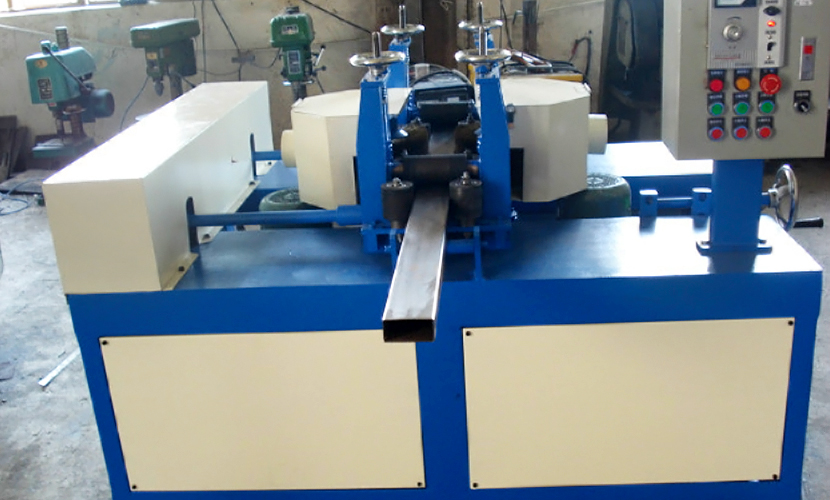
Brushing is mechanical: abrasive belts or wire brushes cut fine parallel lines in one direction, and nothing is added to the metal. Anodizing is electrochemical: in an acid bath under current the outer skin converts into aluminum oxide, a layer that grows out of the metal and therefore does not chip or peel like paint.
The two run in sequence: brushing first, then anodizing preserves the pattern under a clear or dyed film. Brushed aluminum with no film still oxidizes; with a film it keeps its direction and colour.
| Question | Brushed | Anodized |
|---|---|---|
| What it is | Mechanical surface texture | Electrochemical conversion layer |
| Typical reference | AA finishes M-31 to M-35 | MIL-PRF-8625F Amd 2; ISO 7599:2018 |
| Effect on dimensions | None | About half the film grows outward per side |
A supplier quoting "brushed aluminium" without naming a film is quoting an unfinished surface. Our anodizing process guide covers the bath; the next section covers the numbers to write on the drawing.
Is Brushed Anodizing Right for Your Aluminum Enclosure?
Brushed anodizing is not only a surface treatment choice—it can also affect the final appearance, surface durability, maintenance requirements, and overall product presentation.
It is especially worth considering when your enclosure needs a clean metallic appearance while maintaining the functional benefits of an anodized aluminum surface.
Before specifying the finish, it is helpful to confirm:
- Aluminum alloy
- Brushed texture direction and appearance
- Anodizing color
- Gloss level
- Required dimensions and tolerances
- Areas that need to remain conductive
- Logo, printing, or laser marking requirements
- Expected production quantity
Need help selecting the right aluminum finish? Send us your requirements and our engineering team can review the project with you.
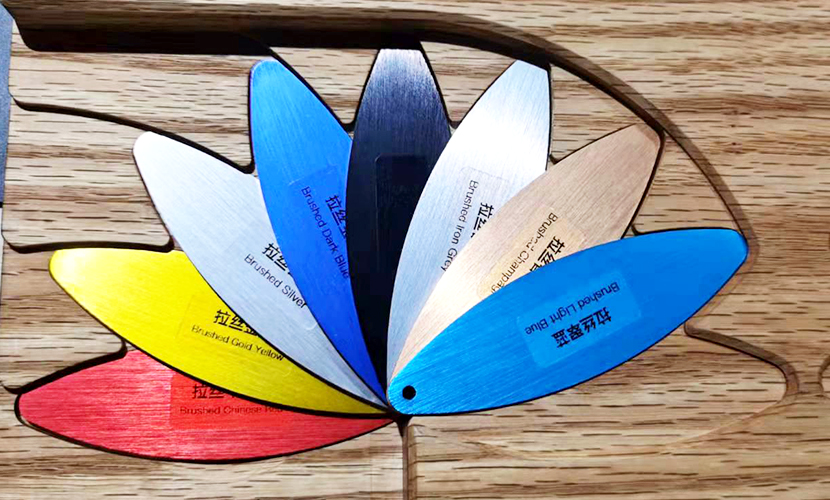
PROCESS OF BRUSHED ANODIZED ALUMINUM
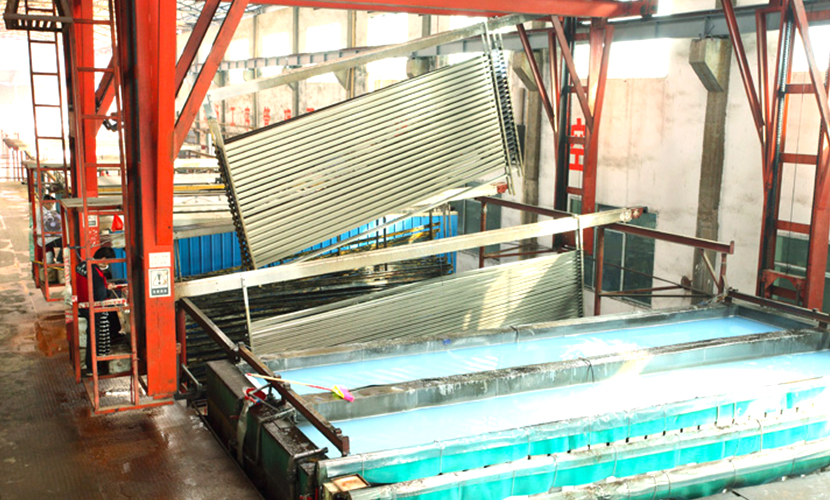
Anodizing aluminum aids in increasing the capabilities and properties of aluminum. Placing the aluminum in a chemical bath and washes would result in anodizing. Hence, an electric charge occurs during this chemical interaction and forms a thick oxide layer. This process is not only for used bright brushed aluminum. You have the option to anodize any aluminum with dyes.
Your bathroom accessories, dust covers, light fixtures, mailboxes, and window frames were products of brushed anodizing. In addition, the food industry generally uses end-products such as display cases, pans, coolers, and grills. Signages are also the most common end product of brushed aluminum.
Brushed anodized aluminum only requires minimal maintenance and resists scratching. It offers excellent wear and abrasion resistance, particularly in high-traffic areas.
What to Put on the Drawing: Grit, Film Thickness and Hardness
Two figures decide what actually arrives: the grit grade of the brushing and the micron thickness of the film.
| Parameter | Typical range | Basis |
|---|---|---|
| Brushing grade | M-31 fine satin, 320 to 400 grit; M-32 medium, 180 to 220; M-33 coarse, 80 to 100; M-35 wire brush | AA finish designations |
| Anodic film, Type II sulfuric | 1.78 to 25.4 μm; decorative enclosure work usually 5 to 15 μm | MIL-PRF-8625F Amd 2 |
| Anodic film, Type III hard coat | 12.7 to 114.3 μm; 50 μm nominal unless the drawing states otherwise | MIL-PRF-8625F Amd 2 |
| Microhardness, 6061-T6 | Type II about 200 to 300 HV; Type III about 400 to 500 HV | Measured on 6061-T6 |
| Salt spray, sealed Type II | 336 hours under ASTM B117 | MIL-PRF-8625F |
One caution: 336 hours is the MIL acceptance level for a sealed Type II film; the 72-hour test we run in house across the A to M series is a separate screening, so quote them apart. These are standard ranges, not a fixed promise.
Grit grade decides how the light reads
320 to 400 grit hides handling marks, usual on instrument faces. 180 to 220 reads as brushed on a chassis panel. Direction matters more than the number: two panels at one grade in opposite directions show a seam side by side.
Film thickness decides colour and corrosion life
Below 5 μm dye uptake is light; 10 to 15 μm carries stable colour and is the normal decorative spec; above 20 μm suits outdoor service but costs tank time. Type III is harder but limits colour to grey-bronze or black.
The 50/50 rule and your tolerances
Film grows half inward and half outward, so a 50 μm Type III coat adds about 25 μm per surface and closes a bore by twice that. Threads and bearing bores need an offset or masking, decided on the drawing rather than in production.
What Should You Specify Before Ordering?
For enclosure projects, the final finish should be considered together with the enclosure design and manufacturing process.
A professional quotation usually needs more than the name of the finish. The enclosure dimensions, aluminum alloy, brushed appearance, anodizing color, cutouts, logo requirements, and expected quantity can all affect the final solution.
Make Your Inquiry Easier
You do not need to prepare a perfect technical specification before contacting us.
You can send:
2D drawing + 3D file + quantity + finish preference
or simply send us:
product dimensions + photos/references + your target finish
Our engineering team can help you clarify the remaining details.
Meanwhile, clear coating the aluminum protects it against corrosion. It forms as a protective layer over the surface of the aluminum. Some aluminum products have invisible clear-coat layers that shield the metal from the environment.
ADVANTAGES OF BRIGHT BRUSHED CLEAR ANODIZED ALUMINUM
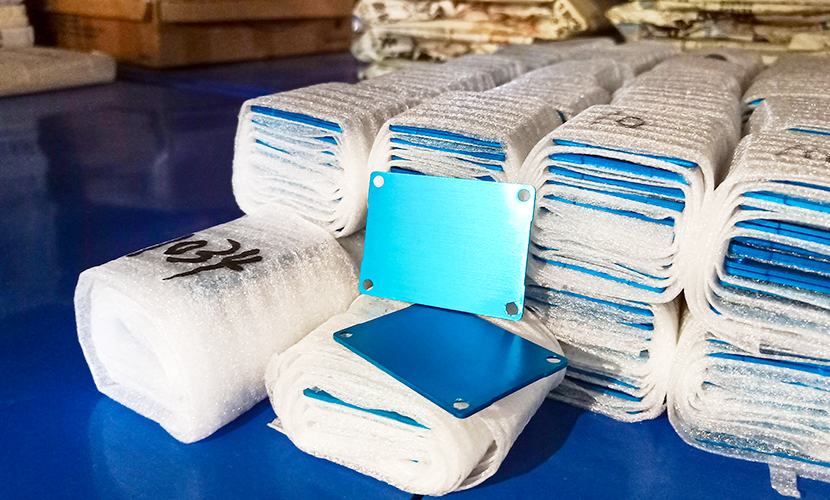
Considering bright brushed anodized aluminum has many benefits. The anodized aluminum has different features. It includes the ability to manage the temperature, durability, and increased strength properties. Thermal control helps a lot that when an anodized aluminum is a window or door, blocking out heat or cold air is vital.
Brushed anodizing can produce a distinct look for interiors and storefronts. It is adhering to environment-friendly practices and is a much-preferred method for its cost-efficiency.
As one of the post-extrusion processes, it refines imperfections and ensures damage-free material handling in the manufacturing and transporting procedures.
Brushed Anodized vs Sandblasted, Powder Coated and Mirror Polished
The right choice depends on which property you are buying: appearance, wear, colour freedom or cost.
| Finish | Appearance | Wear | Corrosion | Colour freedom | Conductivity | Relative cost |
|---|---|---|---|---|---|---|
| Brushed anodized | Directional grain, medium to high gloss | Good; oxide harder than base metal | Good when sealed | Clear plus dyed colours | Insulating; mask for grounding | Medium |
| Sandblasted anodized | Uniform matte, no direction | Good; hides scratches | Good when sealed | Clear plus dyed colours | Insulating; mask for grounding | Medium |
| Powder coated | Flat, opaque, any RAL colour | Moderate; chips at edges | Good, fails at cut edges if pretreatment is poor | Very wide | Insulating | Low to medium |
| Mirror polished anodized | High gloss specular | Lower; polish marks show | Good when sealed | Limited, best in clear or dark tints | Insulating; mask for grounding | High |
Choose brushed anodizing when the product must read as metal rather than a painted box, when fingerprints and light scuffs should stay inconspicuous, and when a film is already required for corrosion. Choose sandblasting when the surface is large, grain direction is hard to hold, or the part may be reworked. Choose powder coating when a brand palette matters more than the metallic look, and accept that edge coverage is the weak point.
Limitations and How Long It Lasts
Anodizing is durable, but not universal.
- Colour varies by batch. Dye concentration, alloy and film thickness all shift the tone, and two batches of one colour code can sit a few ΔE apart.
- The film insulates. Where the enclosure must bond to earth or act as an EMI shield, the layer needs masking at contact points.
- Hard coat changes behaviour. Type III reduces crack resistance and grows dimensions by about half the film per side.
- Scratches read along the grain. A deep one cannot be spot-repaired; the part is stripped and redone.
Service life follows film thickness and environment, not a single number. The oxide does not peel, so failure appears as colour shift and gloss loss under UV, or pitting in chloride atmospheres. A sealed Type II film at 10 to 15 μm holds appearance indoors; coastal exposure needs a thicker film and an agreed cleaning interval.
Looking for a Brushed Anodized Aluminum Enclosure?
YONGU provides customizable aluminum enclosure solutions for projects that require both functional protection and a finished product appearance.
H Series Aluminum Electronics Enclosures
Suitable for electronic devices, PCB housings, control boards, and other customized aluminum enclosure applications.
Available customization can include enclosure dimensions, cutouts, anodizing, wire drawing, sandblasting, and custom colors.
Explore H Series Aluminum Enclosures →
Fully Custom Aluminum Enclosure
When your product requires a non-standard structure, custom dimensions, special cutouts, branding, or other design features, a fully customized enclosure can be developed around your product.
Discuss Your Custom Enclosure →
Already Have a Design?
Send us your existing CAD file, drawing, or product reference.
We can discuss the enclosure structure and surface finish together, so the final appearance and manufacturing requirements can be considered from the beginning of the project.
For material selection before specifying a finish, see our guide to metal vs. plastic electronics enclosure materials.
Brushed Anodized Aluminum: FAQ
What are the downsides of anodized aluminum?
Four matter: the surface stops conducting, colour drifts between batches, hard coat reduces crack resistance and adds size, and a scratched part cannot be repaired locally. Cost is the fifth, since rework costs more than the original process.
What is the difference between brushed and anodized aluminum finishes?
Brushing changes only the texture; anodizing converts the surface into an oxide layer. They are two stages of one finish, not two alternatives, which is why a specification names both: a grit grade such as M-32 medium, and a thickness such as 10 to 15 μm Type II.
Is anodized aluminum better than plain aluminum?
Better on wear and corrosion, worse on conductivity and cost. Bare aluminum forms its own oxide in air, but it is thin, soft and uneven and stains under handling. Anodizing builds a controlled, sealed film of specified thickness, harder than the base metal.
How long does brushed anodized aluminum last?
No single figure exists, because it depends on film thickness and exposure. The layer does not chip or peel, colour shift and gloss loss are the aging mechanisms, and a sealed Type II film is screened to 336 hours of neutral salt spray under ASTM B117. Coastal enclosures should carry a thicker film and an agreed cleaning interval.
Get a Brushed Anodized Finish for Your Next Project
Not sure which aluminum alloy, enclosure structure, brushing effect, or anodizing finish to specify?
Tell us what you are building.
Send your drawing, dimensions, quantity, and preferred appearance. Our team can help you review the enclosure and finishing requirements and prepare a customized solution.
YONGU offers high-quality products that has undergone sophisticated, globally accepted and environment-friendly processes. Products made from brushed anodized aluminum is highly recommended. We can customize according to your needs.