In the high-end audio industry, the enclosure is not just a protective box; it is a critical component that directly impacts sound quality, thermal performance, and brand perception. A well-engineered custom aluminum amplifier chassis serves as the foundation for pure audio reproduction. For audio equipment manufacturers and passionate audiophiles, finding the right balance between aesthetic appeal, electromagnetic shielding, and thermal management can be a significant challenge.
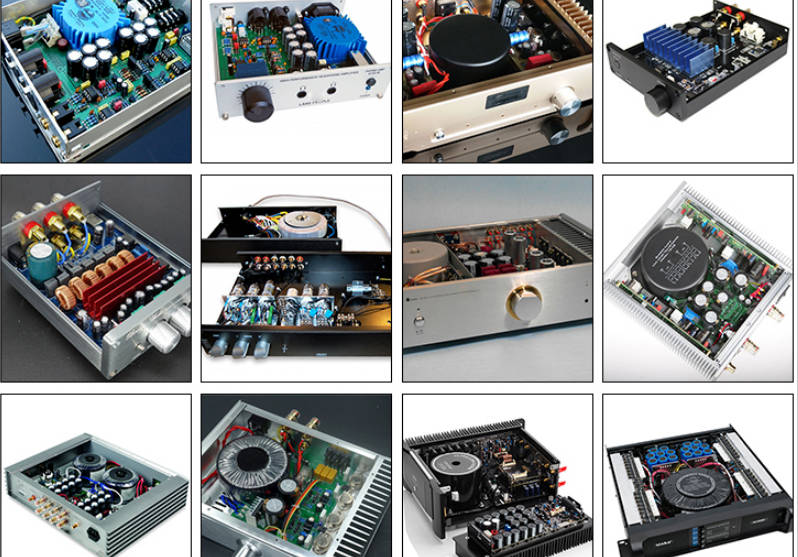
Core Technical Pain Points in Amplifier Enclosure Design
When developing high-fidelity audio equipment, engineering teams often encounter several critical bottlenecks during the chassis design and manufacturing process:
• Thermal Management Failures: Amplifiers, particularly Class A and high-power Class AB designs, generate substantial heat. Standard enclosures often lack sufficient heat sink integration or possess poor thermal conductivity, leading to thermal throttling or premature component failure.
• Electromagnetic Interference (EMI) and Noise: Stray RF signals and internal power supply transformer noise can easily degrade the audio signal. Non-metallic or thin-metal enclosures fail to provide the necessary Faraday cage effect, resulting in audible hum or hiss.
• Acoustic Resonance and Vibration: Flimsy chassis panels act like drumheads, vibrating sympathetically with transformer hum or speaker output. This micro-vibration translates into signal smearing and a loss of audio clarity.
• Supply Chain and Customization Costs: Designing a bespoke amplifier chassis usually involves exorbitant mold fees. Furthermore, traditional suppliers often demand high Minimum Order Quantities (MOQ) and suffer from unstable lead times, making iterative prototyping a nightmare for R&D teams.
Advanced Engineering Solutions for Amplifier Chassis
To overcome these challenges, a scientific approach to material selection, structural design, and manufacturing processes is required.
1. Optimal Material Selection: AL 6063-T5 and 5052-H32
We highly recommend utilizing AL 6063-T5 extruded aluminum for the main heat sinks and structural frames, alongside 5052-H32 aluminum for top and bottom panels. 6063-T5 offers excellent thermal conductivity (approx. 200 W/m·K), rapidly dissipating transistor heat. The 5052-H32 alloy provides superior structural rigidity and vibration dampening characteristics, ensuring a dead-silent background for your audio circuits.
2. Precision CNC Machining for Superior EMI Shielding
To block EMI effectively, the chassis panels must fit together seamlessly. By utilizing full-digital CNC machining centers, we can achieve ultra-high precision tolerances of +/-0.01mm. This tight tolerance ensures gapless assembly, maximizing structural integrity and EMI/RFI shielding performance. Precision milled transformer compartments can further isolate electromagnetic fields from sensitive pre-amp stages.
3. High-End Surface Treatment
For high-end audio, the visual and tactile experience is paramount. Advanced surface treatments such as fine sandblasting (e.g., using 120# to 150# ceramic beads) followed by anodic oxidation (anodizing) create a premium, scratch-resistant finish. This not only enhances the aesthetic appeal but also provides severe environment corrosion resistance and prevents surface degradation over time.
Technical Comparison: Standard Enclosures vs. Custom Aluminum Amplifier Chassis
| Feature | Standard Off-the-Shelf Chassis | Custom Aluminum Amplifier Chassis |
|---|---|---|
| Thermal Dissipation | Basic ventilation, prone to overheating | Integrated extruded AL 6063-T5 heat sinks |
| Structural Rigidity | Thin sheet metal, high vibration | Thick CNC milled panels, deadened resonance |
| EMI Shielding | Poor to moderate, gaps in assembly | Excellent, precision +/-0.01mm gapless fit |
| Aesthetic Finish | Basic paint, easy to scratch | Premium sandblasted & anodized finish |
Yonggu's Expertise in Audio Enclosure Manufacturing
As a professional one-stop enclosure solution provider, Yonggu understands the exact demands of the audio industry. We eliminate the friction of traditional manufacturing:
• Zero MOQ & Rapid Prototyping: We support 1-piece minimum orders, making it incredibly cost-effective for R&D iterations. Our JIT digital production system allows for customized sampling and dispatch within as fast as 24 hours.
• Advanced Manufacturing Capabilities: Equipped with over 160 state-of-the-art digital CNC machines, automatic laser cutters, and a fully automated anodizing line, we control every step of the quality process in-house.
• Design to Production: Whether you need secondary modification on our extensive existing molds or full industrial design from scratch, our engineering team ensures your vision translates perfectly into a manufacturable, high-performance product.
FAQ: Custom Aluminum Amplifier Chassis
Q1: What is the best thickness for a custom aluminum amplifier chassis front panel?
A: For high-end audio, a front panel thickness between 8mm and 15mm is standard. This thickness provides an incredibly solid feel, dampens vibrations, and allows for deep CNC engraving of logos and robust mounting of heavy volume potentiometers.
Q2: Can you customize the heat sinks based on the specific wattage of my amplifier?
A: Yes. We can CNC machine specific fin lengths, spacing, and base plate thicknesses on AL 6063-T5 extrusions to meet the exact thermal dissipation requirements of your specific Class A or AB circuitry.
Q3: How do you handle small batch customization for boutique audio brands?
A: We specialize in flexible manufacturing. You do not need to pay for expensive die-cast molds for small runs. We utilize precision CNC machining from raw aluminum blocks or modify standard extrusions, allowing for cost-effective small batch production (even just 10-50 units).
Elevate Your Audio Brand Today
Don't let a subpar enclosure compromise your meticulous audio circuit design. A premium custom aluminum amplifier chassis is an investment in both sound quality and market positioning. Contact our engineering team today to share your design concepts, and let us provide you with a manufacturable, high-precision solution that brings your audio equipment to life.